-
Preparation Time: 15 Minutes
-
Cooking / Steeping Time: 10 Minutes (if boiling/steeping)
-
Total Time: 25 Minutes
-
Yield / Servings: 2 Servings (approx. 8–10 fl oz each)
-
Difficulty Level: Easy
Cooking Intensities & Equipment Needed
Intensity Levels
-
Blender Speed: High (to fully break down fibrous fresh leaf structures)
-
Heat Intensity (Optional Steeping Method): Medium-High to bring to a boil, followed by Low heat for simmering.
-
Strain Intensity: Fine (use a double layer of cheesecloth or a fine-mesh nut milk bag to remove tough plant fiber).
Equipment Checklist
-
High-speed blender or juicer
-
Fine-mesh strainer, nut milk bag, or cheesecloth
-
Measuring cups and spoons
-
Sharp chef’s knife and cutting board
-
Glass serving pitcher or tall glasses
Ingredients List
To make a fresh, balanced, and palatable mango leaf juice, combine fresh young leaves with natural complementary flavors like lemon, ginger, and raw honey.
Base Ingredients:
-
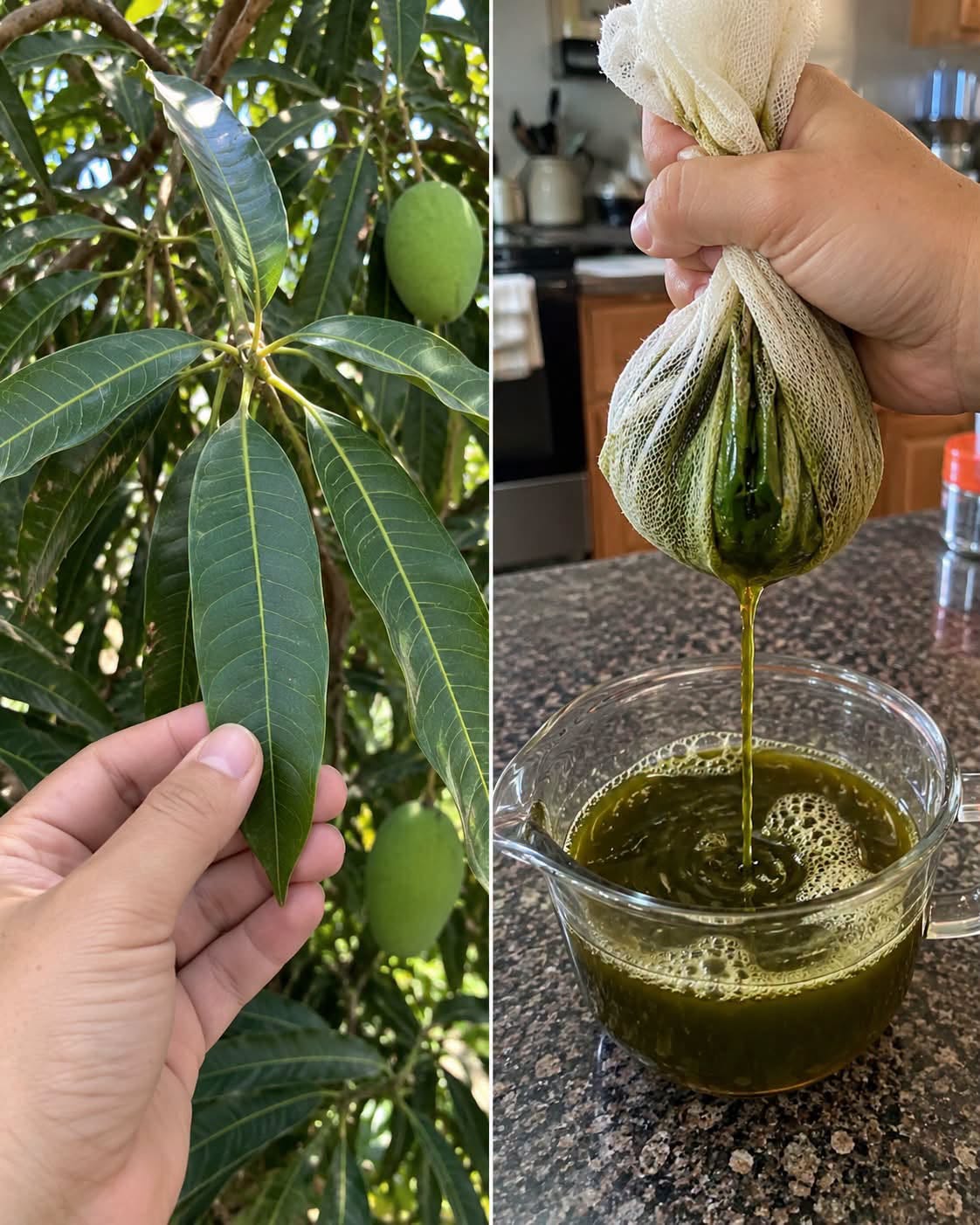
Fresh Young Mango Leaves: 10 to 12 tender leaves (preferably reddish or light green leaves harvested from clean, organic mango trees)
-
Filtered Water: 2.5 cups (approx. 600 ml)
Flavor Enhancement & Synergy Boosters:
-
Fresh Lemon Juice: 2 tablespoons (adds fresh acidity and vitamin C)
-
Fresh Ginger Root: 1/2 inch knob, washed and peeled (adds warmth and digestive support)
-
Raw Honey or Coconut Nectar: 1 to 2 tablespoons (optional, adjusted to taste)
-
Himalayan Pink Salt or Black Salt (Kala Namak): A pinch (enhances minerals and balances earthy notes)
-
Fresh Mint Leaves (Optional): 4 to 5 leaves for added freshness
Step-by-Step Instructions
Step 1: Selection and Thorough Cleaning
-
Choose the Right Leaves: Select tender, soft, young mango leaves. Tender leaves often have a purplish, reddish, or vibrant light green color and are far less fibrous and bitter than older, dark green leaves.
-
Wash Rigorously: Rinse the leaves under cold running water to remove any surface dirt, dust, or residual debris. Gently rub each leaf with your fingers.
-
Soak: Soak the washed leaves in a bowl of cold water with 1 teaspoon of apple cider vinegar or salt for 5 minutes, then give them a final wash with clean filtered water.
Step 2: Preparation
-
Chop the Leaves: Strip the main center stem off the leaves if they are slightly tough, then coarsely chop the leaves into smaller pieces using a sharp knife.
-
Prep the Ginger: Slice or grate the fresh ginger root.
Step 3: Blending Process
-
Combine Ingredients: Place the chopped mango leaves, sliced ginger, fresh mint (if using), and 1 cup of filtered water into a high-speed blender.
-
Blend High: Blend on high speed for 60 to 90 seconds until the mixture is completely pulverized and smooth.
-
Dilute: Add the remaining 1.5 cups of water and pulse for another 10 to 15 seconds to combine evenly.
Step 4: Straining and Pressing
-
Filter Content: Line a glass bowl or pitcher with a fine-mesh strainer or a clean nut milk bag.
-
Strain Content: Pour the blended liquid slowly through the filter.
-
Squeeze Out Juice: Squeeze or press the pulp using the back of a spoon (or squeeze the nut milk bag) to extract every drop of nutrient-rich juice. Discard or compost the dry fiber pulp.
Step 5: Seasoning and Serving
-
Balance Flavors: Stir in fresh lemon juice, raw honey, and a pinch of Himalayan pink salt. Stir well until the honey dissolves completely.
-
Serve Fresh: Pour over ice cubes in chilled glasses. Garnish with a lemon slice or a mint spring. Drink immediately for maximum nutrient retention.
Chef’s Tips & Best Practices
-
Cold-Pressed vs. Boiled (Decoction) Method: If you prefer a lighter tea-like elixir or do not have a blender, you can simmer shredded mango leaves in boiling water for 10–12 minutes, allow it to cool overnight, strain, and serve with honey and lemon.
-
Storage: Fresh herbal juice is best consumed within 30 minutes of preparation to avoid oxidation and nutrient loss. If necessary, keep it stored in an airtight glass bottle in the refrigerator for up to 24 hours.
-
Sourcing Caution: Ensure that the mango leaves are harvested from organic trees that have not been sprayed with synthetic pesticides, chemical fertilizers, or heavy insecticides.
Nutritional Profile
Below is the estimated nutritional breakdown for one serving (approx. 8–10 fl oz / 250 ml) prepared with young leaves, lemon, ginger, and 1 tablespoon of raw honey.
| Nutrient | Amount per Serving | % Daily Value (DV)* |
| Calories | 55 kcal | — |
| Carbohydrates | 14 g | 5% |
| Dietary Fiber | 1.2 g | 4% |
| Sugars (Natural) | 11 g | — |
| Protein | 0.8 g | 1.5% |
| Fat | 0.2 g | 0% |
| Vitamin C | 28 mg | 31% |
| Vitamin A | 420 IU | 8% |
| Vitamin B6 | 0.1 mg | 6% |
| Potassium | 185 mg | 4% |
| Magnesium | 22 mg | 5% |
| Calcium | 35 mg | 3% |
| Iron | 0.9 mg | 5% |
