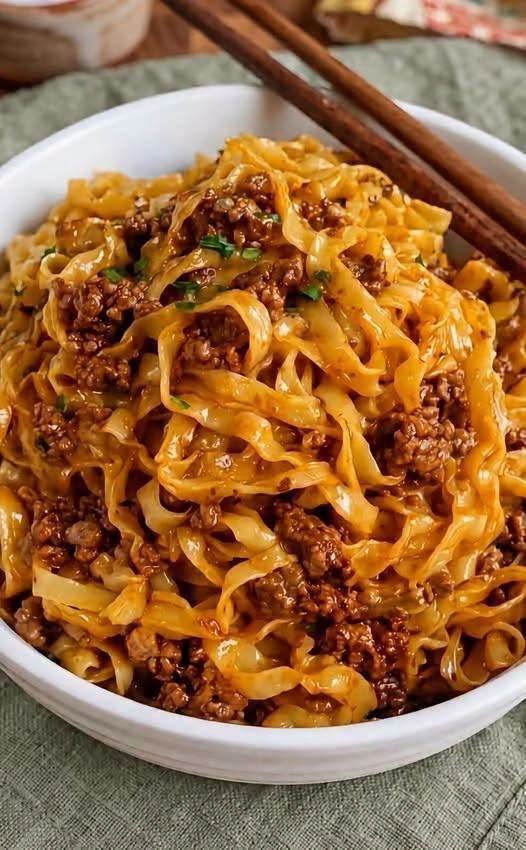
| Prep Time | 10 minutes |
| Cook Time | 15 minutes |
| Total Time | 25 minutes |
| Difficulty / Intensity | Easy — Beginner-friendly; requires simple chopping, boiling noodles, and high-heat pan searing |
| Heat Intensity | Mild (Customizable to Medium or Spicy with red pepper flakes or chili crisp) |
| Servings | 4 generous bowls |
| Course | Main Course / Dinner |
| Cuisine | Chinese-American Inspired |
Why This Recipe Works
-
Ground Beef for Speed and Texture: Ground beef browns quickly and develops crispy, caramelized edges that trap the thick Mongolian sauce in every nook and cranny. Using an 85/15 lean-to-fat ratio ensures rich flavor without leaving excess grease in the skillet.
-
High-Heat Searing: Letting the beef sit undisturbed in a hot pan for the first couple of minutes encourages the rather than steaming the meat in its own juices.
-
Starchy Noodle Water: Reserving a splash of the starchy cooking water before draining your noodles allows you to loosen the cornstarch-thickened glaze at the very end, giving the dish a restaurant-style sheen that coats the noodles evenly rather than pooling at the bottom of the bowl.
-
Pantry-Staple Sauce: Everything needed for the glaze—soy sauce, dark brown sugar, garlic, ginger, and cornstarch—is likely already sitting in your refrigerator or spice cabinet.
Ingredients
For the Mongolian Sauce
-
1/2 cup low-sodium soy sauce: Provides the savory, salty backbone without overpowering the dish as the sauce reduces.
-
1/3 cup dark brown sugar, packed: Brings deep molasses sweetness and creates that signature sticky glaze. (Light brown sugar works in a pinch, though the color and flavor will be slightly milder.)
-
1/3 cup beef broth or water: Balances the concentration of the soy sauce and brown sugar so the glaze coats smoothly.
-
1 tablespoon hoisin sauce: Adds subtle five-spice complexity and extra body to the sauce.
-
1 tablespoon cornstarch: Thickens the liquid into a glossy glaze within seconds of hitting the hot skillet.
-
1/2 teaspoon freshly ground black pepper: Adds gentle background warmth.
-
1/4 teaspoon crushed red pepper flakes: Optional, for a mild kick of heat.
For the Beef and Noodles
-
10 ounces dried lo mein noodles, ramen noodles, or linguine: Fresh or dried wheat noodles hold up best against the hearty beef and thick sauce.
-
1 tablespoon neutral high-heat oil: Vegetable, canola, or avocado oil prevents sticking during initial searing.
-
1 pound lean ground beef (85/15): Offers the ideal balance of tenderness and rich beef flavor.
-
4 cloves garlic, finely minced: About 1 1/2 tablespoons for bright, pungent aroma.
-
1 tablespoon fresh ginger, grated or finely minced: Essential for authentic Mongolian-style warmth and zing.
-
1 teaspoon toasted sesame oil: Drizzled in at the end to preserve its delicate nutty fragrance.
-
4 green onions (scallions), sliced: Separate the crisp white/light green parts for cooking from the dark green tops for garnishing.
-
1 tablespoon toasted sesame seeds: For crunch and visual contrast when serving.
Step-by-Step Instructions
Tips, Variations, and Storage
Pro Tips for Best Results
-
Prep Everything First: Because stir-frying and glazing take only a few minutes, having your garlic minced, ginger grated, and sauce whisked beforehand keeps the aromatics from scorching.
-
Do Not Overcook the Noodles: Noodles continue absorbing moisture once tossed in the hot skillet. Pulling them from the boiling water slightly firm prevents mushiness.
-
Choose the Right Pan: A wide 12-inch skillet or flat-bottomed wok gives the ground beef enough surface area to brown properly rather than steaming in a crowded pile.
Easy Variations
-
Add Vegetables: Toss in 2 cups of finely shredded coleslaw mix, baby spinach, steamed broccoli florets, or thinly sliced bell peppers right before pouring in the sauce for extra color, crunch, and nutrients.
-
Swap the Protein: Ground turkey, ground chicken, or ground pork work seamlessly as a one-for-one substitute for the ground beef.
-
Make It Gluten-Free: Replace the soy sauce with certified gluten-free tamari, use gluten-free hoisin sauce, and swap wheat noodles for rice noodles or gluten-free ramen.
Storage and Reheating
-
Refrigerator: Store leftover noodles in an airtight container in the refrigerator for up to 4 days.
-
Reheating: Reheat individual portions in the microwave for 60 to 90 seconds, or warm in a skillet over medium-low heat. Add a splash of water or broth before reheating to revive the glossy texture of the sauce.
-
Freezer: While the cooked beef and sauce freeze well for up to 2 months, noodles tend to soften after thawing. For best texture, freeze the cooked beef mixture separately and toss with freshly boiled noodles when ready to eat.
Nutrition Information
Estimated values per serving (based on 4 servings using 85/15 lean ground beef and dried lo mein noodles):
| Nutrient | Amount per Serving | % Daily Value* |
| Calories | 545 kcal | 27% |
| Total Fat | 18 g | 23% |
| Saturated Fat | 6.5 g | 33% |
| Cholesterol | 75 mg | 25% |
| Sodium | 1,180 mg | 51% |
| Total Carbohydrates | 66 g | 24% |
| Dietary Fiber | 3 g | 11% |
| Total Sugars | 19 g | — |
| Protein | 29 g | 58% |
