Directions
1. Prepare the Liver
Remove any visible membranes or connective tissue. Pat the liver dry with paper towels and season both sides with salt, pepper, and paprika.
Drying the surface helps the liver brown rather than steam.
2. Cook the Onions
Heat 1 tablespoon of oil or butter in a large skillet over medium heat. Add the sliced onions and cook for 8–12 minutes, stirring regularly, until soft and golden.
If the onions begin sticking, add a tablespoon or two of water or broth.
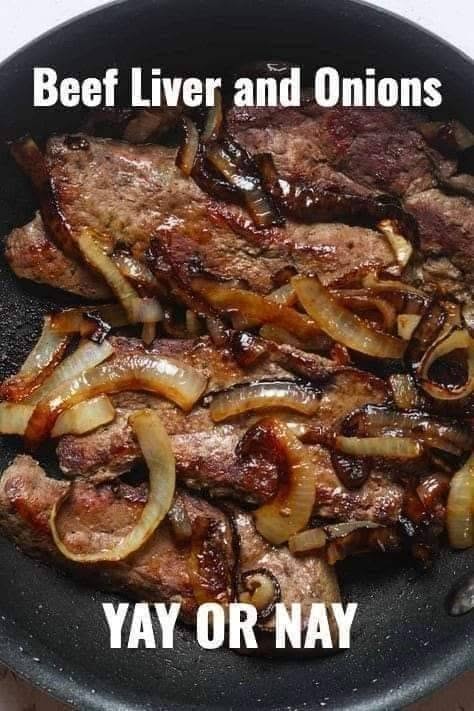
Visual cue: The onions should look glossy and golden, with lightly browned edges. Transfer them to a plate.
3. Sear the Liver
Add the remaining oil to the same skillet and increase the heat to medium-high. Arrange the liver slices in a single layer, working in batches if necessary.
Sear briefly on each side until browned, then check the thickest slice with a food thermometer. Beef liver should reach an internal temperature of 160°F (71°C) for food safety. Do not rely on color alone to judge doneness.
4. Add Garlic and Seasonings
Reduce the heat to medium-low. If using garlic and thyme, add them and stir for about 30 seconds, until fragrant but not browned.
Return the cooked onions to the skillet and add a splash of broth or water if needed to loosen the browned bits.
5. Combine the Ingredients
Stir gently and cook for another 1–2 minutes, allowing the onion flavors to mingle with the liver. Avoid prolonged cooking after the liver reaches its safe internal temperature.
6. Garnish and Serve
Sprinkle with fresh parsley and serve immediately.
Serving suggestions: Pair with steamed broccoli, sautéed green beans, cauliflower mash, or a fresh green salad.
Nutrition Facts (Per Serving – Approximate)
Estimated for four servings using beef liver, onions, and two tablespoons of oil. Values vary with the cut of liver and preparation.
- Calories: 280
- Fats: 13 g
- Cholesterol: 300 mg
- Sodium: 380 mg
- Potassium: 400 mg
- Total Carbohydrates: 10 g
- Fiber: 2 g
- Net Carbs: 8 g
- Sugars: 4 g
- Protein: 27 g
- Calcium: 20 mg
Nutrition note: Beef liver is exceptionally rich in preformed vitamin A and also supplies substantial copper. Enjoy it occasionally rather than daily. People who are pregnant or trying to become pregnant should avoid liver because of its high preformed vitamin A content.
Notes
- For milder flavor: An optional short milk soak may help, but it is not required.
- For tender results: Slice evenly, avoid overcrowding the pan, and cook to a safe internal temperature.
- For extra flavor: Add a small splash of Worcestershire sauce or fresh thyme.
- Allergy notes: The basic recipe can be gluten-free when using suitable broth and seasonings; check packaged ingredient labels.
- Serving idea: Pair with green vegetables or a small portion of potatoes for a traditional meal.
Frequently Asked Questions
1. How can I make beef liver taste milder?
Trim away visible membranes and optionally soak the liver in milk for 20–30 minutes before cooking.
2. Why does beef liver become tough?
It often becomes tough when overcooked, so use a thermometer to check safe doneness and avoid unnecessary extra cooking.
3. Can I make beef liver and onions without flour?
Yes, flour is optional, and omitting it keeps the recipe lower in carbohydrates.
4. Is beef liver high in protein?
Yes, beef liver provides substantial protein along with nutrients such as vitamin B12 and iron.
5. Can I freeze cooked beef liver and onions?
Yes, freeze it in airtight portions for up to 2–3 months for best quality.
6. How often should I eat beef liver?
Because it contains exceptionally high amounts of vitamin A and copper, beef liver is best enjoyed occasionally rather than every day.
