| Prep Time | 20 minutes |
| Cook Time | 20 minutes (in 3 to 4 batches) |
| Total Time | 40 minutes |
| Yield / Servings | 12 medium pancakes (4 servings of 3 pancakes) |
| Difficulty / Skill Intensity | Easy to Moderate — Simple ingredients, but requires active moisture extraction and attentive heat management during pan-frying. |
| Physical Effort Intensity | Moderate — Hand-grating potatoes and thoroughly wringing out liquid require firm manual grip strength unless using a food processor. |
| Heat / Cooking Intensity | Medium-High — Requires steady shallow-frying at 350°F–375°F (175°C–190°C) to crisp the edges without burning the exterior or leaving the center raw. |
Why This Method Works
The single greatest enemy of a crispy potato pancake is excess water. Potatoes are roughly 80 percent water; if that liquid enters the hot oil, the batter steams rather than fries, resulting in limp, greasy pancakes that fall apart when flipped.
To guarantee maximum crunch, this recipe uses a two-stage starch recovery method:
-
Aggressive Wrung-Out Drainage: Grated potatoes and onions are twisted inside a clean kitchen towel or cheesecloth until nearly dry.
-
Starch Decanting: Instead of discarding the squeezed potato liquid, it sits undisturbed for two minutes. The dense, pure potato starch settles at the bottom of the bowl. Pouring off the brown water and returning that white starch paste to the batter acts as a natural, gluten-free binder that fries into an ultra-crisp crust.
Ingredients
For the Potato Batter
-
2 lbs (900 g) Russet potatoes (about 4 medium-large potatoes), peeled — High-starch russets deliver the fluffiest interior and crispiest edges; avoid waxy red or fingerling potatoes.
-
1 medium yellow onion (about 6 oz / 170 g), peeled — Adds sweetness, savory depth, and sulfurous compounds that slow potato browning.
-
2 large eggs, lightly beaten — Provides structural lift and binds the shredded strands together.
-
3 tablespoons all-purpose flour (or matzo meal / potato starch for gluten-free) — Absorbs residual moisture during frying.
-
1 ½ teaspoons kosher salt (use 1 teaspoon if using fine table salt)
-
½ teaspoon freshly ground black pepper
-
¼ teaspoon baking powder (optional) — Creates tiny air pockets for a slightly lighter interior.
For Frying and Serving
-
½ cup (120 ml) neutral high-smoke-point oil (such as canola, vegetable, avocado, or refined sunflower oil), plus more as needed between batches
-
Flaky sea salt, for finishing immediately after frying
-
Traditional toppings: Full-fat sour cream, unsweetened applesauce, chopped fresh chives, or smoked salmon
Step-by-Step Instructions
1. Grate the Potatoes and Onion (Intensity: Moderate Effort)
Set a box grater over a large mixing bowl. Using the large teardrop holes, grate the peeled Russet potatoes and the yellow onion, alternating between the two. The onion juice naturally coats the potato shreds and prevents them from turning gray or pink while you work. If using a food processor fitted with the shredding disc, pulse in short bursts so the vegetables shred cleanly rather than turning into mush.
2. Extract the Moisture and Save the Starch (Intensity: Moderate Effort)
Transfer the grated potato-onion mixture into the center of a clean, lint-free dish towel or a double layer of cheesecloth. Gather the corners together over a separate medium bowl and twist tightly with both hands, squeezing with firm pressure until every possible drop of liquid is expelled. Set the wrung-out potato bundle aside for a moment.
Let the bowl of squeezed liquid sit undisturbed for 2 minutes. Slowly pour off the dark reddish-brown liquid from the top, leaving behind the thick, chalky white layer of pure potato starch settled at the bottom of the bowl.
3. Mix the Batter (Intensity: Low Effort)
Dump the dry potato-onion shreds directly into the bowl containing the reserved white potato starch. Use your fingers to separate the compacted clumps. Add the beaten eggs, all-purpose flour, kosher salt, black pepper, and baking powder. Toss gently with a fork or your hands until the shreds are evenly coated and no dry pockets of flour remain. Do not overmix, and do not let the batter sit idle for more than a few minutes before frying.
4. Shallow-Fry in Batches (Intensity: Medium-High Heat)
Set a heavy-bottomed 12-inch skillet (cast-iron or stainless steel works best) over medium-high heat. Pour in enough oil to coat the bottom of the pan to a depth of about ⅛ to ¼ inch. Heat the oil until it shimmers and a single shred of potato dropped in sizzles immediately on contact (around 365°F / 185°C).
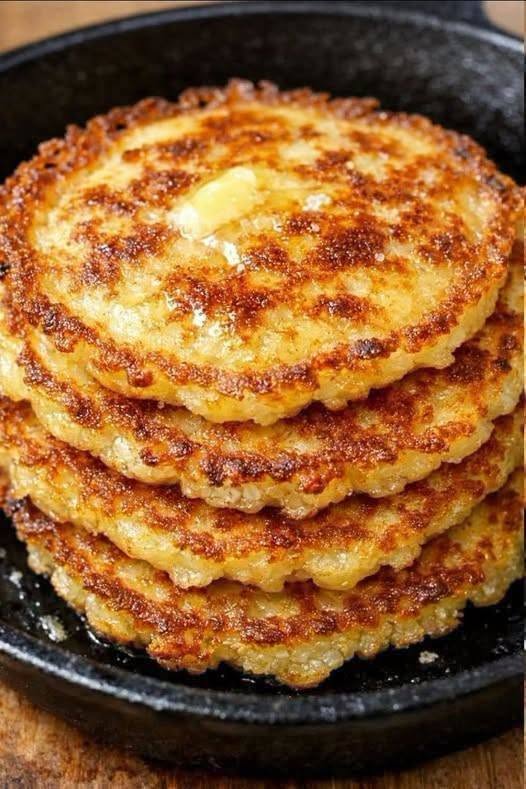
Scoop about ⅓ cup of the potato mixture per pancake into the hot oil, leaving at least 1 inch of space between each mound so the oil temperature does not drop. Immediately press each mound down with the back of a slotted spatula into a flat disc roughly 3 ½ inches wide and ⅓ inch thick, leaving the outer edges slightly lacy and irregular.
Fry undisturbed for 3 to 4 minutes until the undersides and lacy edges turn a deep, rich golden brown. Carefully flip each pancake and cook for another 3 to 4 minutes on the second side until crisp all the way through. Adjust the burner between medium and medium-high as needed: if the edges darken in under 2 minutes, lower the heat slightly; if they look pale after 4 minutes, raise it.
5. Drain, Season, and Serve (Intensity: Low Effort)
Transfer the finished potato pancakes to a wire cooling rack set over a baking sheet (a wire rack keeps the bottoms crisp, whereas paper towels can trap steam). Immediately sprinkle with a pinch of flaky sea salt while hot. Skim any stray browned bits from the skillet, replenish the oil by a tablespoon or two if the pan looks dry, let it return to temperature, and repeat with the remaining batter. Serve immediately while piping hot.
Storage, Reheating, and Make-Ahead Tips
-
Refrigerating Leftovers: Store completely cooled potato pancakes in an airtight container lined with paper towels for up to 3 days.
-
Freezing: Arrange cooked, cooled pancakes in a single layer on a parchment-lined baking sheet and freeze until solid (about 2 hours). Transfer to a freezer-safe zip-top bag for up to 2 months.
-
Reheating for Maximum Crispness: Never use a microwave, which turns the exterior rubbery. Place refrigerated or frozen pancakes on a wire rack over a baking sheet and bake in a 400°F (200°C) oven for 8 to 10 minutes (12 to 15 minutes from frozen), or air-fry at 375°F (190°C) for 4 to 6 minutes until sizzling and crisp.
Nutrition Information
The nutritional values below are estimates calculated per serving (3 medium potato pancakes), excluding optional toppings such as sour cream or applesauce, and accounting for typical oil absorption during shallow-frying.
| Nutrient | Amount per Serving (3 Pancakes) | % Daily Value* |
| Calories | 340 kcal | 17% |
| Total Fat | 16 g | 21% |
| — Saturated Fat | 1.8 g | 9% |
| — Trans Fat | 0 g | — |
| Cholesterol | 93 mg | 31% |
| Sodium | 590 mg | 26% |
| Total Carbohydrate | 42 g | 15% |
| — Dietary Fiber | 3.8 g | 14% |
| — Total Sugars | 3.1 g | — |
| Protein | 8 g | 16% |
| Potassium | 940 mg | 20% |
| Vitamin C | 14 mg | 16% |
| Iron | 2.1 mg | 12% |
