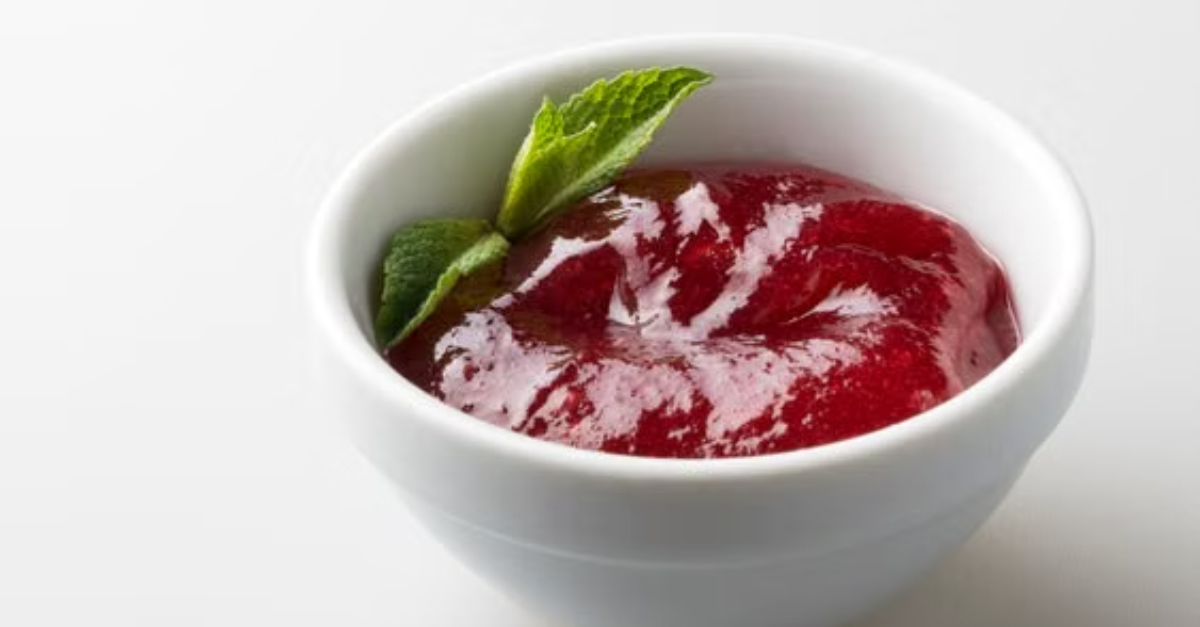
| Category | Details |
| Prep Time | 15 minutes |
| Maceration Time | 1 hour (inactive) |
| Cook Time | 25–30 minutes |
| Cooling & Setting Time | 4 hours |
| Total Time | 1 hour 45 minutes (plus cooling) |
| Yield / Last of the Recipe | 3 half-pint (8 oz / 240 ml) jars — approx. 48 tablespoons total |
| Storage Shelf Life | Up to 4 weeks refrigerated; up to 12 months sealed in a pantry |
Ingredients
-
2 pounds (900 g) fresh rhubarb stalks, trimmed, washed, and sliced into ½-inch (1.25 cm) pieces (about 6 to 7 cups chopped)
-
2 cups (400 g) granulated white sugar (gives a balanced tart-sweet profile; increase to 2 ½ cups if you prefer a sweeter jam)
-
3 tablespoons (45 ml) fresh lemon juice (about 1 large lemon; essential for brightness and helping the jam set)
-
1 teaspoon (5 ml) pure vanilla extract or ½ teaspoon ground cardamom (optional, for subtle warmth)
-
Pinch of fine sea salt (balances acidity and sharpens the fruit flavor)
-
½ teaspoon unsalted butter (optional, stirred in during boiling to reduce surface foam)
Equipment Needed
-
Large, heavy-bottomed, non-reactive saucepan or Dutch oven (stainless steel, enameled cast iron, or copper—avoid bare aluminum)
-
Wooden spoon or heatproof silicone spatula
-
Small ceramic plate placed in the freezer (for testing the gel set)
-
3 clean half-pint (8 oz) glass jars with sterilized lids
-
Canning funnel and ladle
Step-by-Step Instructions (With Heat Intensities)
Step 1: Prep and Macerate the Rhubarb
Time: 15 minutes active + 1 hour resting | Heat Intensity: None (Room Temperature)
-
Trim the woody ends and remove any leaves from the rhubarb stalks—rhubarb leaves contain high levels of oxalic acid and should always be discarded. Wash the stalks thoroughly and pat them dry with a clean kitchen towel.
-
Slice the stalks crosswise into uniform ½-inch pieces so they break down at the exact same rate. If any stalks are especially thick, slice them lengthwise down the center before chopping.
-
Place the chopped rhubarb into your heavy-bottomed saucepan or a large mixing bowl. Pour the granulated sugar and fresh lemon juice over the fruit, add the pinch of salt, and toss thoroughly until every piece is coated in sugar.
-
Let the mixture sit undisturbed at room temperature for 1 hour. During this maceration phase, the sugar draws moisture out of the rhubarb fibers, creating a natural ruby-pink syrup. This prevents the fruit from scorching when heat is applied and preserves vibrant color.
Step 2: Dissolve the Sugar Gently
Time: 5–7 minutes | Heat Intensity: Low to Medium-Low
-
Before turning on the stove, place a small ceramic plate into your freezer so it is ice-cold when you test the jam later.
-
Transfer the macerated rhubarb and all accumulated juices into your wide, heavy-bottomed pot over low to medium-low heat.
-
Stir gently and continuously with a wooden spoon until the sugar dissolves completely into the liquid. You should no longer feel gritty sugar crystals scraping against the bottom of the pot. Do not rush this stage on high heat, or undissolved sugar may crystallize later in the jars.
Step 3: Soften and Break Down the Fruit
Time: 8–10 minutes | Heat Intensity: Medium
-
Once the sugar is fully dissolved, increase the burner to medium heat. Bring the mixture to a steady, gentle simmer.
-
Cook uncovered, stirring every minute or two to ensure the bottom does not catch. As the rhubarb heats through, the stalks will soften, release more juice, and begin to collapse into a chunky, glossy compote.
-
Use the back of your wooden spoon to mash any stubborn chunks against the side of the pot if you prefer a smoother spread, or leave them intact for a rustic, textured jam.
Step 4: Rapid Boil to Reach the Gel Stage
Time: 10–12 minutes | Heat Intensity: Medium-High to High
-
Increase the heat to medium-high (or high on a standard electric coil stove) to bring the jam to a full, vigorous rolling boil—a boil that cannot be stirred down. If foamy scum rises to the surface, stir in the ½ teaspoon of butter to disperse it.
-
Stir almost constantly, scraping the bottom and corners of the pot in a figure-eight motion so the thickening sugars do not burn.
-
As water evaporates, the bubbles will change from large, watery, fast-popping bubbles to smaller, thicker, glossy bubbles that pop slowly and heavily. If using a candy or instant-read thermometer, you are aiming for 220°F (104°C).
Step 5: Perform the Wrinkle Test & Finish
Time: 2 minutes | Heat Intensity: Off / Residual Heat
-
Remove the pot from the burner so the jam does not overcook while you test it.
-
Retrieve your chilled plate from the freezer and spoon ½ teaspoon of hot jam onto the center. Let it sit for 30 seconds, then push the edge of the puddle with your fingertip. If the surface wrinkles and holds a clear path without flooding back together, the jam has reached its setting point. If it remains runny, return the pot to medium-high heat for another 2 minutes and retest.
-
Once set, stir in the vanilla extract or ground cardamom off the heat. Skim off any remaining foam with a metal spoon for crystal-clear jars.
Step 6: Jar, Cool, and Store
Time: 10 minutes active + 4 hours cooling | Heat Intensity: None
-
Ladle the hot jam into clean, warm glass jars, leaving ¼ inch of headspace at the top. Wipe the rims clean with a damp paper towel and screw on the lids until fingertip-tight.
-
Let the jars cool completely undisturbed at room temperature for 4 hours while the jam sets to its final spoonable consistency.
How Long the Recipe Lasts (Yield & Shelf Life)
-
Total Recipe Yield: This batch produces 3 standard half-pint jars (24 ounces / 680 grams total), which equals roughly 48 one-tablespoon servings. For a household eating toast or yogurt daily, one batch typically lasts 2 to 3 weeks.
-
Refrigerator Storage (Quick Method): Once cooled, store the jars in the refrigerator. Unopened or opened, refrigerator rhubarb jam stays fresh, bright, and flavorful for up to 4 weeks.
-
Freezer Storage: Leave ½ inch of headspace in freezer-safe jars, cool completely, and freeze for up to 6 months. Thaw overnight in the fridge before using.
-
Pantry Canning (Long-Term Storage): If you process the filled jars in a boiling-water bath for 10 minutes (adjusting for altitude), sealed jars will keep in a cool, dark pantry for up to 12 months. Once opened, refrigerate and consume within 4 weeks.
Nutrition Facts
Serving Size: 1 tablespoon (approx. 20 g)
Servings Per Recipe: 48
| Nutrient | Amount Per Serving | % Daily Value* |
| Calories | 38 kcal | 2% |
| Total Fat | 0 g | 0% |
| Saturated Fat | 0 g | 0% |
| Cholesterol | 0 mg | 0% |
| Sodium | 3 mg | 0% |
| Total Carbohydrates | 9.5 g | 3% |
| Dietary Fiber | 0.4 g | 1% |
| Total Sugars | 8.8 g | — |
| Added Sugars | 8.3 g | 17% |
| Protein | 0.2 g | 0% |
| Vitamin K | 5.6 mcg | 5% |
| Vitamin C | 1.8 mg | 2% |
| Calcium | 17 mg | 1% |
| Potassium | 55 mg | 1% |
